Signs you need this
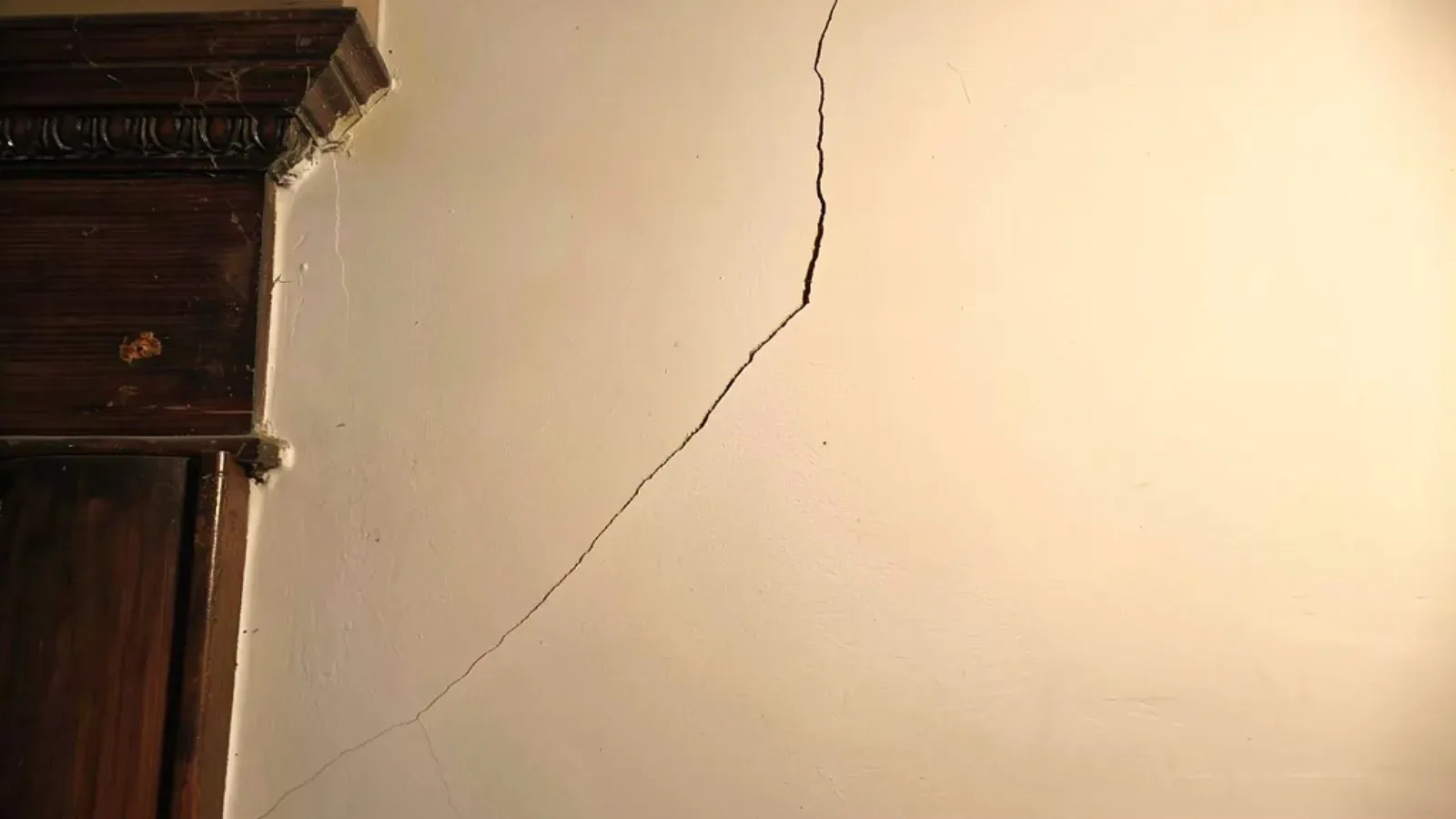
- • A diagonal crack running from a doorframe or window corner toward the ceiling
- • A crack at the corner bead, the strip protecting an outside wall corner, that keeps splitting open
- • A hairline crack that was patched once already and has reopened in the same spot
- • Stair-step cracking that follows the seam pattern of the drywall sheets rather than a clean straight line
Reading a crack before touching it: settling, seams, or a loose corner
Norwalk Drywall & Plaster starts every crack repair by reading the crack itself before deciding on a fix, because the shape tells us more than the homeowner’s description usually can. A diagonal crack running from the top corner of a door or window frame up toward the ceiling is almost always a stress-concentration crack: the opening in the wall is a structural weak point, and any small amount of settling or framing shrinkage shows up there first, radiating out at that characteristic angle. A crack that instead runs perfectly straight and follows the taped seam between two sheets of drywall is usually a taping issue, where the original tape didn’t bond fully or was coated too thin to bridge normal seasonal movement, and it will keep opening at that exact seam until it’s re-taped with enough compound behind it. New units in the Wall Street and West Avenue redevelopment corridor show us a specific version of the first pattern: fresh construction settling as the building’s full weight comes to rest on its foundation over its first year or two, which produces a batch of hairline cracks appearing together rather than one crack growing in isolation. We treat that pattern differently than an isolated crack in an older home, because the whole building is still finishing its initial settle, and a rigid patch applied too early gets re-broken by the same ongoing movement within a season.
Why a spackle-over fix on a recurring crack in Silvermine and Brookside’s older homes never holds
Norwalk Drywall & Plaster sees a specific kind of frustration in Silvermine and Brookside, where a homeowner has spackled the same wall crack two or three times over several years and watched it come back every winter. These are older foundations that have been settling in small seasonal increments for decades, expanding and contracting slightly with ground moisture and freeze-thaw cycles, and a rigid compound patch has no way to absorb that repeated tiny movement. It bonds hard across the crack, holds through a dry season, and then splits again at the exact same line the next time the ground shifts, because the patch itself has become the weak point instead of a flexible joint built to move with the house. Our fix for that pattern is a control joint or a flexible, elastomeric-backed tape system installed at the crack line instead of a standard rigid tape-and-mud repair, which lets the seam expand and contract by a small amount without transferring that stress straight through the paint film. We also check corner bead at the same visit, since a loosened bead near a well-used doorway produces the same recurring-crack complaint but needs the bead itself reset or replaced, not just another coat of compound over a fastener that’s already stopped gripping the framing underneath it.
Materials & standards
Products & materials we use
- FibaTape
- corner bead
- USG Sheetrock
Standards & codes we work to
- 2022 Connecticut State Building Code
- ASTM C1396 / C840
What the terms mean
- control joint
- corner bead
- stair-step cracking
- mesh tape
- settling crack
- mud and tape
Options & variants
| Option | When it applies | Cost |
|---|---|---|
| Flexible / control joint repair | Crack sits on a seam that will keep moving seasonally (new-construction settling, truss-related seams) | Priced by crack length |
| Mesh-reinforced rigid patch | Crack has stopped moving and won't reopen if bridged | Standard patch pricing |
| Corner bead reset | Crack runs along an outside wall corner where the bead itself has loosened | Priced per corner |
What affects cost
- • How many separate cracks and where they run: one straight hairline versus several stair-step cracks across a room
- • Whether the crack is still active (moving) or has stabilized
- • Corner bead condition: resetting versus full replacement
- • Texture and paint match once the crack is bridged and refinished
- • Access: cracks near ceiling height or in tight stairwells take longer
What to expect
- 1
Read the crack
We look at the crack's shape and location, diagonal from an opening, straight along a seam, or stair-stepped, to identify the likely cause.
- 2
Check whether it's active
We check whether it's active by cleaning it out and watching whether it reopens over a few weeks, or by checking for a fresh edge versus an old, painted-over edge.
- 3
Bridge or reset
We rout out the crack slightly and bridge it with fiberglass mesh tape or install a flexible control joint, depending on the diagnosis.
- 4
Coat and blend
We coat, feather, and sand to blend with the surrounding wall.
- 5
Match texture and paint
We match texture and paint so the repaired line disappears.
When this isn’t the right call
- If the crack is a seasonal line at the ceiling-to-wall seam that opens and closes with the weather, ceiling repair is the better fit.
- If the damage is an isolated hole or gouge, not a crack, drywall repair and patching is the better fit.
- If cracks appear alongside major foundation settlement, doors that won't close, or floors visibly out of level, that's a structural engineer's call before it's a drywall call, and we'll tell you plainly if that's what we're seeing.
Frequently asked questions
My condo in the West Avenue redevelopment area is only two years old and already has wall cracks. Is that normal? +
Yes, to a point. New construction settles as the building's framing and foundation adjust to full load over the first year or two, and that often shows up as hairline cracks at drywall seams. We bridge those with a flexible repair so they can keep moving slightly without reopening the finish.
I patched a crack myself and it came back in the same spot. Why? +
A straight spackle-over-crack repair has no way to accommodate the movement that caused the crack, so it reopens at the same weak point. We rout it out and bridge it with mesh tape or a control joint instead, giving the seam somewhere to flex.
What's a corner bead crack, and why does it keep happening at the same corner? +
Corner bead is the strip protecting an outside wall corner, and it can loosen from the framing over time, especially at a corner near a frequently used doorway that gets bumped. If the bead itself has lost its grip, patching over it without resetting the bead just cracks again at the same spot.
How do you tell a cosmetic crack from a structural one? +
We look at the shape, width, and whether it's paired with other signs like doors that stick or a visibly sloping floor. A hairline crack on its own is almost always cosmetic. A wide, stair-stepped crack paired with sticking doors gets a straight answer from us that this needs a structural engineer before any drywall work.
My older home in Silvermine has had the same wall crack reappear every couple of years for as long as I've owned it. Can you actually stop it? +
If the movement causing it, usually seasonal foundation or framing shift, hasn't stopped, no repair makes it permanent, but a flexible control-joint repair holds up far longer than a rigid patch because it's built to move with the house instead of fighting it.
Do you repair cracks in ceilings too, or just walls? +
We repair ceiling cracks diagnosed the same way as wall cracks: actual settling or seam movement. A crack running along a ceiling-to-wall seam that opens and closes seasonally is usually truss uplift, which we treat as part of ceiling repair rather than a settling crack.